Wednesday, March 5, 2014

Ash Wednesday: The Day of Dirty Foreheads or Affirmation of Creation?


I think I was ten or eleven. I had gotten to school a bit early that day, so I was one of the first kids in homeroom. When a classmate shuffled into the room, I resisted the urge to say, “You...umm...have a lil' something on your face.” After four or five more students came in with what looked like dirt on their foreheads, I figured it couldn't just be a coincidence. Those students were Catholic, and that was my first introduction to Ash Wednesday. I simply hadn't heard of the tradition until that morning, when some of my friends explained it to me. By the time they arrived at school, of course, most had inadvertently smudged it to the point of being completely unrecognizable as a cross. 

To be replaced with a picture of my own smudged forehead later 
Over the next several years, my opinion of the Day of Dirty Foreheads (as I called it then) didn't change much. I thought it was weird, silly even. It was a mostly-empty and superstitious ritual, one of the vestiges of medieval Catholicism. Part of me wondered if God cared at all whether my classmates had ashes on their forehead, or if He shared my own reaction to it. Today, I realize that my bias against the imposition of ashes was mostly a result of being raised as a low-church Methodist. We simply didn't “do that sort of thing.” 

My distaste for religious practices that involve a material aspect grew in high school, when I set up a dichotomy in my mind between the physical world and the spiritual one. I believed one of the main points of religion was to reject materiality, or at least to ignore it. Our bodies would die one day, our souls drifting up to heaven forever. The physical earth itself, as well as the universe, would be destroyed (hopefully in the far distant future). This was all part of God's plan. The sooner we realized that our bodies and earthly substance were irrelevant from God's perspective, the better. It's what's inside the head and heart that counts. What purpose did the imposition of ashes, baptism, and the Lord's Supper have other than as purely symbolic acts?

Skip forward in time several years. Later this evening, I'll be receiving ashes at my Lutheran church. Suffice it to say that my opinion on Ash Wednesday has evolved since I was a kid. So has my view of the material world. Those ashes won't secure my salvation. They won't effect forgiveness of sins, nor are they intended to. But to me, feeling those ashes on my forehead is a strong affirmation of the fact that God is the originator of the earth as much as He is of the heavens. He created this world, and He declared it to be good. He gave us custodianship over it and over our bodies, both of which we have abused and mistreated. In spite of this, and contrary to the popular idea that the Christian hope is to escape this rock before it falls to pieces, God hasn't given up on us or on any of His creation. To do so would have marked His greatest defeat at the hands of the powers of sin, death, and decay. 

Instead, we're promised that one day, Heaven and Earth will be fused together, and that He will then restore our bodies to us along with the ground on which we walk. For now, the ashes I receive are a reminder of my mortality and need for repentance. But if Jesus defeated death for all of us in his Resurrection, then our physical and moral frailty isn't a permanent condition. When he returns, we will become like him. With bodies no longer able to get sick or die, no one will be able to say of us, “Remember that you are dust, and to dust you shall return.” I'll take that vision of eternity over playing a harp on a cloud any day. 

Monday, February 24, 2014

Power Made Perfect in Weakness: Hopes, Fears, and Picking Sides at LTSP


It was simple, really. Anyone else would have listened to the pastor's instructions, then quickly and calmly gone about it. For me, though, it was akin to a Herculean task. When I heard that I had to light 24 candles on a table in a particular order during the service that day, I immediately clenched up and could feel my palms starting to sweat. Why was it such a big deal? I'm a bit awkward, a little clumsy. Physical tasks that are done as second nature by most people are often difficult for me. My mind and body sometimes have a hard time syncing up with each other, especially when I'm feeling under pressure. 

What the church would have looked like had I been successful
Reminding myself that I could do it if I calmed down and took my time, I lit five of the candles in the right order. All right, I thought, this ain't so bad after all. I got to the sixth with some momentum-inspired confidence. It wouldn't light. The wick refused to cooperate with me, no matter what I did. When the first few minutes of unsuccessful attempts had passed, I started wondering if the candle was defective or if my pastor had decided to play a cruel joke on me. I remembered one birthday party when I was a kid when my parents topped my cake with those trick candles that are almost impossible to blow out. Maybe my pastor had found something similar, but with the opposite effect. 

But curiosity/suspicion of my pastor's professionalism soon turned to anxiety and embarrassment. Resigning myself to the fact that it would be better to skip this candle than to struggle with it until my pastor had to intervene, I went to the seventh...which wouldn't light. I became aware of a crescendo of murmurs of confusion and complaints from the packed sanctuary. Hundreds of people, many of whom I had never really talked to because I was new to the congregation. They wouldn't understand, they wouldn't forgive. I was ruining the whole service. I had to do something, and fast, before the whole church turned against me like a pitchfork-wielding mob. 

What the church ended up looking like
Right next to the candles was a recycling bin. Spying a piece of paper on the top of the bin, I grabbed it with the idea of lighting the piece of paper and using it as another way to light the wick of the seventh candle. My plan, as brilliant and considerate of fire safety as it was, didn't go so well. Instead of successfully lighting the candle, I ended up fumbling the flaming scrap of paper and dropping it back into the recycling bin, which by luck happened to be filled with various highly-flammable odds and ends. As a pillar of fire shot out of the bin and hundreds of shouts of alarm and anger echoed off the cathedral ceilings, I thought, Well, something like that was bound to happen eventually. As well as, Why on earth would someone leave a bin full of gasoline-drenched paper right next to so many candles?

Then I woke up. It took me about a second to realize that I wasn't in my own bed and to remember why. Looking through the window shades onto the campus of the Lutheran Theological Seminary at Philadelphia, it struck me how unusually realistic the dream had been. Most of my dreams have an element of fantasy or impossibility to them. (About once every two weeks since I was a teenager, for example, I have had a dream about zombies. Don't ask me why.) I suppose that having to light one of the many candles at the previous evening's service had made a strong impression on my brain. It was also rare for me to feel so anxious in a dream. Usually, they're much more positive or are similar to watching a movie on a screen.

I got up and grabbed some Wawa iced tea from the fridge of the guest apartment that had been allotted to me. In the middle of a delicious gulp, I made a decision:  I wasn't going to shrug this dream off as meaningless. For thousands of years and in many different cultures, dreams were believed to be of great importance. As necessary as it often was to interpret them (as in the story of Joseph or some Greek myths), they were nonetheless considered to be one of the most powerful and direct revelations from the god(s) that we humans could receive. They were like text messages straight from the deity to the human brain. Freud and others have dulled that concept quite a bit in our Western culture. I myself am hesitant to see every dream I have or every little thing that happens as a sign from God. 

But there comes a certain time when we can't help but think that He's trying to send a message, something that he wants us to see so badly that He knocks us on the head with it over and over again (and perhaps gets a little frustrated by our dullness and insensitivity). At that point, it would be foolish not to listen. At the worst, we might feel a little silly later on for sensing signs or patterns that weren't actually there. At the best, we can come in closer contact with God's will for our lives.  

I had been on the campus for less than a day. In those hours, though, I had seen and heard enough that I had an idea of what God's message to me might be. I had come to LTSP for the weekend expecting to see the campus and neighborhood, meet some of the faculty, staff, and students, and try my best to make a few good impressions. I hoped I could come to a decision about whether I should attend seminary, specifically LTSP. I think that God wanted all these things to happen, too. But He had more in mind. God didn't want me to just enjoy this weekend. He was calling me to go to war. 

He had already drawn the battle lines. On one side were my hopes, passions for the Lord and His Word, and intentions to discover whether a life in the Church could be a part of how God wants me to reflect His love out into the world. At my strongest, I'm convinced that I can meet any of the challenges that would face me as a pastor, with the help of God and the important people in my life. On the other side was an army of doubts, fears, and misgivings. At times, their cries of “You? In seminary? What's the point? You're not suited to do this!” make me want to run as quickly as I can in the other direction. Or, worse yet, to raise a white flag, to feel in my heart like I never stood a chance against them. To let myself be surrounded by them, to be stripped of my armor and sent into exile. To give up, and find something else to do and be. 

Maybe something that involved a bit less physical coordination, for example. I'm aware that a career in ministry is far from being an intensely-physical one. But my awkwardness and utter lack of handyman skills have occasionally entered my mind as something to take into account considering the diverse tasks that a pastor must perform. On the whole, however, it's not a major concern. Certainly nothing that I would expect such a vivid and negative dream to be centered around. Pouring out another cup of Wawa iced tea and sitting down, I began to think about what the dream could really be telling me. I believed that God wanted me to face my doubts that weekend, and that the dream I had woken up from and my folly with the candles was just a facade concealing a more serious issue, one that had much greater potential for keeping me from feeling confident in any future decision to enter seminary. An image immediately sprang up in my mind, and I knew what that issue was. 

The image was of a green slip of paper. The words of Claudio Carvalhaes, the pastor at the chapel service the night before, were still echoing in my brain when I finished writing on it. As was the case with much of the weekend, his sermon had touched me much more deeply than I thought it would. He had spoken passionately (to say the least) about how seminary changes everyone who goes through it, how our walk with God will always transform who we are in one way or another. "Go," he urged. "Go back home if you can. Forget about your weekend here. But if that's not possible, if you feel God pulling you here, pulling you to a life of serving others, then come and see." (My apologies to him for my poor paraphrasing of his wonderful sermon.) In that moment, I wanted to come to seminary so badly that it hurt. When we were instructed to write prayers on green slips of paper, my heart went to the one thing that was keeping me back from committing to the kind of life Claudio had described. I wrote, "Can I do this, Lord? Can I get past how I look or how I think I look? Allow me to see me as you see me, God.”  

I've struggled with self-image since high school, specifically with one part of my body:  my face. It's almost never crippling or debilitating. For a large majority of time, I go about life with a fair amount of confidence. It mostly manifests as nervousness around women that I'm attracted to, actually. But in the last few years, moments of self-consciousness have become increasingly frequent and have begun to seep into other areas of my life. It's gotten to the point where I sometimes am convinced that people are fighting the urge to be revolted when they see me, or even that my friends are continuing to talk to me in person only out of kindness or sympathy. No matter how many times close friends and family tell me that I'm not ugly, I have a hard time fully accepting it. I've begun to wonder if I could ever live the rest of my life as a pastor, to serve as a community leader, to be in front of potentially hundreds of people as a focus of attention for at least an hour or two every Sunday. On a more individual basis, I've feared that I would be unable to counsel others because of my appearance. Who would want to listen to what I had to say? Who would want me to be their pastor?

A big part of me knows how unfounded these concerns are. More than that, I'm aware of how destructive my negative body image can be if I give into it and allow it to affect my self-esteem and interpersonal relationships. Feeling self-conscious and worrying about what other people are thinking of me is no way to live, and it makes loving God and neighbor the best I can almost impossible. But another part of me, one deep down in the dark recesses of my heart, one more insistent to be heard than the other, reasserts its message that I shouldn't be in a career that is as thoroughly social as ministry, that I should do something behind the scenes instead, like be a telemarketer or accountant. I would be relatively safe there, that voice says, away from the risk of failure or embarrassment. Away from so many eyes.

For the last several months, these two voices have been in conflict with each other. The second voice could usually be held below the surface, but it would strike when I felt vulnerable or uncertain about what God wants for my future. Claudio's sermon helped me to realize that, in the words of JK Rowling, "neither can live while the other survives." I had to make a choice between putting the bulk of my insecurities to rest at last, or surrendering to them and always perceiving myself as a victim. God had already picked a side. Out of His love, He chose me. And now He wanted me to make the same choice, and to remain firmly in His camp until the war was over. 

That Saturday morning, I vowed to pay close attention to everything I saw, heard, and felt for the rest of my time at LTSP. In a weekend full of rewarding and challenging conversations and experiences, though, Sunday morning turned out to be the climax of my “Battle of Philadelphia.” The first skirmish of the day centered around the account of one of the current students, Jeremiah Smith, about his spiritual growth and call to ministry. As with Claudio's sermon, he employed a lot of humor at first. But soon, I found myself riveted to every word. When he said, “Don't let fear be a part of your decision to enter seminary,” it hit home with me so much that, against my better judgment, I felt almost like he was speaking directly to me. I realized that my hesitations to embark on a path toward ministry were based on fear. Fear of failure, fear of embarrassment and rejection. Fear that I couldn't possibly be understanding God's will for my life correctly. 

Previous to my weekend at LTSP, I had assumed that I was in a small minority for having doubts and fears about following a vocation in the Church. I thought that the decision would have been clear to most other people, that they were all natural-born leaders with few misgivings about what God wanted them to do. The more I heard and spoke with both current and prospective students, the more I realized how naïve my assumption had been. I discovered that I was far from alone in fighting against the voices telling me that I shouldn't and couldn't enter into ministry. And I drew great strength in that, not out of some sense of schadenfreude over the difficulties the other participants at the retreat had endured, but because I was able to see God transforming their doubts and hesitations into determination to do His will and to be in a closer relationship with Him. I began to hope that others could one day take strength in my own struggles. That, years down the road, my testimony could change a life even a tiny bit for the better, that it would help someone to know in their heart that they had the support, not only of God, but of so many people sharing in their attempt to discern God's will for their lives while feeling vastly unequipped to act according to it. 

As it turned out, I didn't have long to wait before I had the chance to put this into practice. At the end of the Sunday service with Professor Karyn Wiseman, she asked us all to turn to our neighbor and discuss some of the doubts we were feeling at that point. I turned to the prospective student next to me and proceeded to unload on him, in less than a minute, my self-image issues, fears, and hopes. His response humbled me to the core:  “Dan, every word you said just now I could apply to myself. My whole life, I've had a hard time with how I view myself and how others view me. You know, you've really made a strong impact on me. Not just in the last few minutes, but this whole weekend. I'm really looking forward to seeing you in the fall.” 

In just two days, I had impacted someone's life for the better, and him me. In that moment, all of the wonderful and intimate relationships I've formed since childhood flooded into my mind. As destructive as my negative self-image had seemed sometimes, it had never been strong enough to prevent me from making meaningful connections with the people in my life, showing them God's love, or taking comfort in each other and in the Lord during times of hardship. That, I realized, is a large part of what being a pastor (and a human) is about. God made us as social creatures. He wants us to love and to share our lives with each other. And in the process, He can transform something that appears to us as weakness into strength. 

This He does for His glory, as attested by Bible verses that Professor Wiseman had read toward the end of the Sunday morning service:  

Brothers and sisters, think of what you were when you were called. Not many of you were wise by human standards; not many were influential; not many were of noble birth. But God chose the foolish things of the world to shame the wise; God chose the weak things of the world to shame the strong. God chose the lowly things of this world and the despised things―and the things that are not―to nullify the things that are, so that no one may boast before him. (1 Corinth. 1:26-29)

But, as the Apostle Paul himself knew, God does this also for our sake. Not just to comfort us in times of difficulty, but to allow us to know that struggles and hardships can be, mysteriously and paradoxically, an integral part of how we can work to bring about His will for the world. Paul's experience with a “thorn in his flesh”--probably a physical or mental ailment—is the clearest example of what I like to call “weakness theology.” 

Three times I pleaded with the Lord to take it away from me. But he said to me, “My grace is sufficient for you, for my power is made perfect in weakness.” Therefore I will boast all the more gladly about my weaknesses, so that Christ’s power may rest on me. That is why, for Christ’s sake, I delight in weaknesses, in insults, in hardships, in persecutions, in difficulties. For when I am weak, then I am strong. (2 Corinth. 12: 8-10)

This strength is not derived from picking ourselves up by our bootstraps. It's God's power becoming our own; His strength being made perfect in weakness, not mine. Unlike mankind's, God's strength is one that I can depend on. Only God's strength could transform all of my doubts and insecurities into something constructive, into a determination to do His will and to share my experiences with others who have felt like they were held back by something they have deemed outside of their control. 

This transformation won't occur overnight. I'm sure that I will continue to struggle with my body image and confidence from time to time. To employ war imagery one last time, I like to think that I'm living between D-Day and V-Day. The war isn't over quite yet, but the victory is assured. All because God chose to be on my side and was committed to pushing me out of my position of neutrality during that weekend at LTSP, forcing me to align myself either with Him or with my fears. 


More important than the timing, however, were the people that God used to make the event so conducive to spiritual exploration and genuine fellowship. I'm incredibly thankful for every single person that was involved. My time there wasn't a visit to a campus. It wasn't an open house. It was a weekend that allowed me to repeat in my heart with conviction and hope (as we had sung countless times during services in the campus chapel), “Be not afraid, sing out for joy. Christ is risen, hallelujah!”

Sunday, February 23, 2014

The Greatest of These is Love


A few months ago, I was helping a friend pick out selections from the Bible for the priest to use during her wedding ceremony. The priest had made a list of about 20 for her to choose from. At the very top was 1 Corinthians 13, which he had circled and underlined, presumably to call her attention to the fact that she should probably choose it. After I mentioned to my friend (who had been reading the King James Version) that the word “charity” would nowadays be translated as “love,” she smacked her forehead and said, “Ohhhhhh, that one!”

1 Corinthians 13 is one of the most beautiful passages in the New Testament, and certainly in Paul's letters. The lessons that newlyweds can learn from it are extremely valuable and sorely-needed in our society:  love as the basis of how we should interact with our spouse, its ability to provide meaning to our actions, and its enduring positive qualities. Love is greater than so much of the negativity that we encounter in our lives. It endures all things, and if a couple is driven by love, they can pass relatively unscathed through many of life's challenges. One could go on for quite some time thinking about how Paul's poem can be applied to fostering healthy relationships.

However, 1 Corinthians 13 is not a stand-alone love poem, or advice offered to individuals on the occasion of their wedding day. Rather, it serves as the climax of a critique of the community Paul was writing to. Throughout the letter, he criticizes the Corinthians for their divisions, boasting, and arrogance, all things which were preventing the Spirit from working in them fully. Moreover, the qualities he saw in them were against the teachings of Jesus. Paul believed that many in the Corinthian church were using their talents not as a way to glorify God but to raise themselves above the poor and the socially disadvantaged. These gifts were theirs, they believed, to do with as they liked.

But in Chapter 12, Paul reveals both the origin and purpose of the gifts: “There are varieties of service, but the same Lord; and there are varieties of working, but it is the same God who inspires them all in every one. To each is given the manifestation of the Spirit for the common good.” (5-7) Even as individual Christians were equal members of the body of Christ, so they should use whatever gifts they had been given for the health of the Christian community as a whole. If someone is a talented healer but is using their knowledge to puff themselves up or helping others only begrudgingly, then how are they really serving God or neighbor?In contrast to their self-centered interactions with each other, Paul was determined to show them a better, more "excellent" way: that of self-giving love.

As he explains in Chapter 13, pure, divine love was at the center of Paul's vision for the future. He believed that, when the marred world we all live in is one day transformed and flooded by God's Spirit of love and peace, gifts that the Corinthians had prided themselves on, like knowledge, prophecy, and speaking in tongues, will no longer be necessary. “Love,” Paul wrote, “never fails. But where there are prophecies, they will cease; where there are tongues, they will be stilled; where there is knowledge, it will pass away. For we know in part and we prophesy in part, but when the perfect comes, then the imperfect shall pass away.” (9-10) We're like children now, Paul says, seeing things unclearly and knowing only in part. When Jesus appears again, it will be time to put away childish things. Only then will we be able to see and know as God wants us to. Arrogance and pride in the gifts He has given us will play no part in that world. When Jesus returns and his Kingdom breaks in fully, we will all be speaking God's language of love naturally. For now, Paul advises, we as Christians should be practicing it for all we're worth, knowing that the good we do for others is not in vain. 

So, is 1 Corinthians 13 about love between a husband and wife? In a way, yes, though there's much more to this piece of scripture than a how-to for achieving marital bliss. Nonetheless, I don't think that pastors should stop using the chapter for weddings, or that couples should stop requesting it. The main point of the poem still applies:  Only by having our thoughts and actions motivated by love for God and the people around us can we fulfill the purpose that God, who is Himself love, wants for us, His children. This is the message that Paul so badly wanted his churches to absorb into their minds and hearts, and it's a message that has the potential to transform all our relationships, whether with our spouses, friends, or even our enemies.

Thursday, January 30, 2014

"Varieties of Service:" My Plans for Volunteering in Bosnia


In the last few years, I've written about God's love a lot. I like to talk about it, even get choked up about it every once in a while. But actually to put into practice? Not so often. For as long as I can remember, I've preferred to think, write, or talk about things, rather than DO them. But the more I study the Bible and reflect on the world, the more I'm faced with a truth that clashes with my occasional laziness, as well as my proclivity for wanting to stay in the safe (though often outlandish) confines of my mind:  Love is much less about warm feelings and sentimentality than we think it is. It has to be backed up by actions, or it means essentially nothing.  

This was a hard pill for me to swallow at first, partly because I had an overly-narrow conception of what it might mean for me to love through my actions. I was thinking back on all the community service and volunteer activities I had heard of my friends doing, and was failing to see how I could make a contribution in any of them. Maybe, I thought, I wasn't cut out for service work. Maybe I should stick to what I was comfortable with and knew I enjoyed doing. God would understand if I wasn't really suited for going out and doing things. Something the Apostle Paul wrote helped me to resist the urge to fall into this way of thinking:  “There are varieties of service, but the same Lord; and there are varieties of working, but it is the same God who inspires them all in every one. To each is given the manifestation of the Spirit for the common good.” (1 Corinth. 12:5-7) 

I may not be of much help building a house or assisting doctors in a village in a foreign country (nor, for that matter, plenty of other things that require physical dexterity or coordination). I'll probably never solve world hunger or cure cancer. But I could at least try to transform whatever skills or interests I have, no matter how academic or impractical they seem to me, into something concrete that could make a positive impact on someone's life. To love, not just with hollow words, but in deed and in truth. Over the last few years, I've been attempting to figure out what that would look like in practice. This June, I plan to be involved in something that I hope will be one big step in the right direction. 

About six months ago, I learned that the church organization I belong to, the NJ synod of the Evangelical Lutheran Church in America, has been running mission trips to Bosnia for the last 15 years. This year, volunteers will be there from June 20th to July 1st. Most of those days will be spent running programs for children at schools and orphanages throughout the country. Volunteers will often be broken into four groups to lead activities involving music, acting, sports, and a community project. While having fun and meeting a lot of new people, the goal is for children to learn the value of diversity and to build skills in teamwork and conflict resolution. 

The more I heard about it, the more the idea of participating in this trip “clicked” in my mind. For the last six years, travel has been a passion of mine. Most of that travel has been to the Middle East, so I've gotten used to some of my family and friends questioning my sanity in going to locales that they consider dangerous or unstable. I've received a very similar reaction to my plans for this summer, in spite of the fact that the wars in that region ended in the 90s. While Bosnia is far from being a war zone, it continues to bear the physical and emotional scars from those years. The country has more than its fair share of political and economic challenges ahead of it, and there is much healing that needs to be done, not least among its youth. 

It's clear from testimony from both volunteers and students that the trips have done a lot of good over the years. And because of my interests in travel, music, and acting, I feel I can make a real contribution to this mission work. Unfortunately, airfare to Bosnia and expenses while in the country aren't cheap. I'm hoping to be able to raise $2,400 by the end of May so that I can attend. 

A view of Sarajevo
That's where you come in. If you've made it this far in reading this blog post, please consider whether you are feeling called to help me to reach my goal. Every dollar counts. If you're not in a position to contribute monetarily, then any prayers or moral support in the next several months would be vastly appreciated. If you want to know more about the Bosnia mission or have any questions, please go to www.servanttrips.org for a lot more information. Please, help me to share a tiny bit of the love that has been shown to me, and to be an agent of peace in a country that is in sore need of it.

Monday, January 27, 2014

The Ease of Mourning a Building


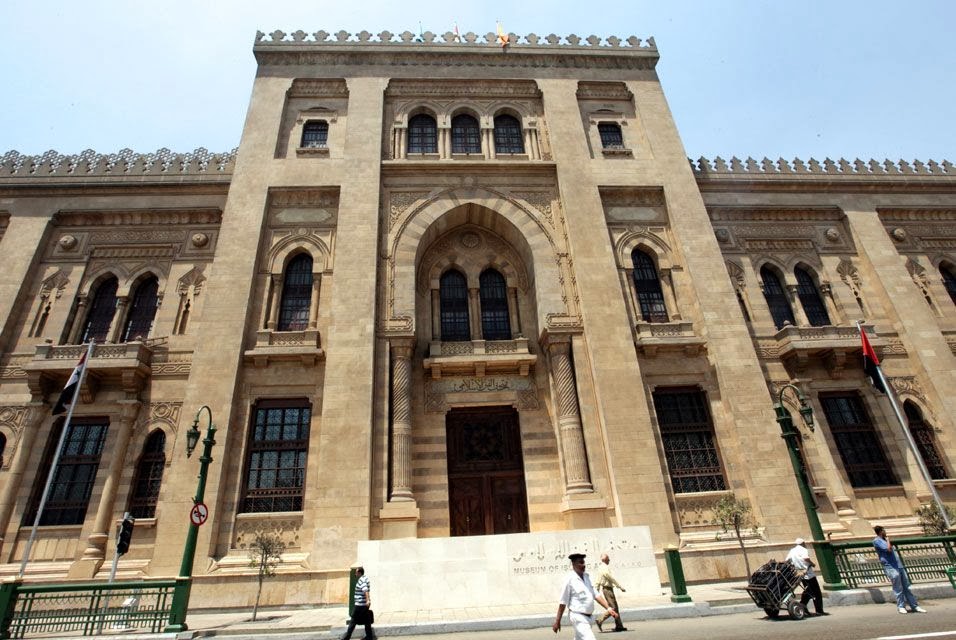
During my first visit to Cairo in the summer of 2010, I made an effort to hit as many of the obligatory tourist spots as I could. Homesick, feeling exhausted from the heat, and a bit strapped for cash, I didn't get to them all. On one of the days, though, I managed to fit in some time for the Egyptian National Museum. With the exception of the gallery dedicated to King Tut's belongings, it was an hour and a half that I wished I could get back. It struck me as unorganized, mismanaged, and dirty. On my second trip to the city a year later, an American I met at my hostel persuaded me to go to the Islamic Art Museum with him. I expected to find much the same as I had in the Egyptian Museum, but was pleasantly surprised to discover a pristine museum with an amazing collection of well-organized artifacts. On Friday, a car bomb went off at the police headquarters building, close enough to the museum that much of it was severely damaged. The National Library and Archives were similarly affected. Exactly how much was destroyed is still unclear, but the loss of even a few of the works of art at the museum is a tragedy.

I was devastated by the news. Priceless works of human creativity and knowledge were now gone because of one act of violence. And somehow, that fact outweighed the human toll in my mind. Four people had died and fifty were wounded because of the explosion. On the next day, the third anniversary of the 25 January Revolution, at least 29 were killed and hundreds injured or arrested. In spite of this, I kept returning to the loss of artifacts and documents. And I felt guilty as hell because of it. I knew that human pain and suffering should mean a lot more to me than the destruction of material things, no matter how old or beautiful. This should have especially been the case with violence in Egypt, a country I had come to love during the time I lived there. 

Eventually, I realized how I could feel the way I did:  I was far enough that I was able to, and it was easier and less upsetting for me. Because I now live half a world away from Egypt, I have the option to shut out the violence and loss of life. Improvements in communication and recording technology allow us to have nearly-instantaneous reports of events through Twitter, Facebook, and YouTube. But if we want them to, they can be no more than images or sounds on a screen, happening to extras in a movie rather than to real people whose lives have been torn apart by turmoil. We Americans have a knack for dehumanizing and ignoring negative events around the world. 

In the days after the explosions, a big part of me wanted to do just that. Not in spite of my connections with the country, but because of them. Being upset about millions of dollars of repairs to the museum and library was easier for me than reflecting on the hellish roller coaster that Egypt has found itself on since its revolution. It was easier for me to lament the destruction of a thousand-year-old Islamic manuscript than the death of someone's father, mother, brother, sister, or friend. It was safer, because I was afraid that if I allowed myself to think any more deeply about the situations there, I would completely lose hope that Egyptians will one day live in a just country that doesn't swing from one brand of despotism and rights abuses to another. 

In the end, another thought about the Islamic Art Museum helped me not to give in to feelings of futility and despair. In the articles I read about Friday's explosions, there was no mention of the possibility of leaving the building to decay or be abandoned. It will be at great cost, but the building and its collections will be rebuilt and restored. They won't be allowed to be in shambles forever. Like the museum, Egypt has a chance for a future, even though much has already been lost. As long as there are people who love the country and its people, who are committed to rebuilding Egypt and transforming it into a country better than the one it had been before the revolution, there is hope. 

Monday, January 13, 2014

My Seminary Essay (Part 2)


Of course, my return to Christ and decision to enter seminary didn't occur simultaneously. I had a decent knowledge of theology and the Bible, a love for God that I had never thought possible, and a strong desire to help other people and preach the Gospel. Now it was a matter of figuring out how God wanted me to use those gifts and passions. Seminary seemed like a logical and appealing choice, but I was also aware that one didn't need to be a rostered church leader in order to serve or spread the Good News. Why not get a desk job, find a position in museum work, or pursue a career teaching Middle Eastern history at a secular university? None of these jobs would necessarily prevent me from being active in my church or community. 

Praying for guidance became a common practice for me, as did discussions with friends and family. Over time, I found myself being nudged more and more in the direction of theological and pastoral training. In addition to Pastor Mark Rossman, the advice and encouragement of my oldest and most devout friend, Kelly Graziano,  were crucial in my decision to begin the candidacy process. 

From early on, I knew that frequent evaluations of the strengths I would bring, as well as the obstacles that may cross my path during my education and ministry, should be essential in my decision. One of my main strengths is in academic study and biblical knowledge. As an undergraduate, I studied history, literature, and languages, three subjects that I've been passionate about since I was a teenager. I began to study Christian theology and interpretation of the Bible about three years ago, as mentioned above. In addition to my private readings, I have attended six Bible studies and taught one. I love being in a classroom setting as a student, and consider myself to be a leader in discussions. Secondly, I started writing short, sermon-like reflections on God and scripture last year, and have been posting weekly to a blog for about five months. I enjoy writing and hope to continue it in the years to come. In terms of my interpersonal relationships, I tend to be the person that friends and family members confide in, trust, and ask for advice on a wide range of issues. I think that I'm very sincere and genuine, which tends to lower people's defenses and put them at ease. Finally, seminary education and ministry in the ELCA would pose no severe hardship in terms of family, mobility, and financial concerns. I'm single, don't have children, and have a total of about $10,000 debt from my undergraduate institution. 

In terms of weaknesses and areas that I would like to improve in, it usually takes me several days to feel comfortable in an unfamiliar situation and with lots of new people. So, for example, if I was appointed to a church it might take some time to feel at ease in my new position and with the members of the congregation. I might have difficulty if any important decisions needed to be made quickly that would affect the church community. I would also like to be more active in service and missions in the upcoming years. 

In the end, though, my decision to start the ELCA candidacy process isn't just about making lists of strengths and weaknesses, or considering the pros and cons of entering into a profession in the Church. It's about discerning a call to vocation, a process of prayer and discussion in which personal experiences can also play a part. In June of this year, I attended the NJ synod assembly with Pastor Rossman. By the end of the first day, after hours of reports from various committees, voting on various issues, and listening to suggestions for changes and additions to memorials, I was exhausted and had a headache that was becoming increasingly unpleasant. I wondered if my decision to go to the meeting had been a wise one. I woke up the next morning for a service. And in the middle of a hymn, the sound of hundreds of pastors and laypeople singing washed over me. I looked around at the other tables and rows of chairs. All these people, coming from churches throughout New Jersey, worshiping God. Not only through the singing of hymns, reciting of creeds, and the receiving of Holy Communion that morning, but through daily service to their congregants and communities. 

Intertwined with the seemingly-mundane, even in the hours of reports and debates at the synod assembly, was something greater. Something holy. This is how God is working in our world, I realized:  through visits to shut-ins and hospital patients, addressing the needs of congregations and communities, serving as a shoulder for people to cry on and as a confidante for those in need of help or advice. He could be seen in the organizing of relief work and missions, in the overseeing of Bible studies and youth groups and Sunday schools. Through the daily grind, day after day and Sunday after Sunday. It's that work, that vocation, that I want to be a part of. During that morning service, I felt a sense of awe and gratitude for the road God had put me on that led to this moment. I had the sense that, yes, He approved of my decision. God willing, this committee will be able to see the potential in me to do His work, to be His servant as a rostered pastor in the ELCA. 

My Seminary Essay (Part 1)


In April of 2010, I told my mother that I had converted to Islam a few weeks before. It was one of the most difficult conversations I've ever had with her. At the end she said, “Well, who knows, maybe you'll go back to being Christian one day.” I remember scoffing and replied, “Yeah, maybe, but I highly doubt it.” Yet here I am, three and a half years later, writing an essay as part of the candidacy process to begin an ELCA (Evangelical Lutheran Church in America) seminary education. And somehow, it makes total sense to me. In my head and in my heart, the idea that God is calling me to ordained ministry, to be a help and a blessing to others, feels right. It feels like what God wants me to do.

It's strange how life can seem like it's come full-circle. For a few years in high school, I hoped to become a pastor. I was active in the youth group of a friend's non-denominational church, was very passionate about the faith, and identified as a born-again (even to the point of being “re-baptized”). But slowly, imperceptibly, I lost my faith in Christianity during my freshman year of college. God and I were on good terms, I thought, and Jesus' sacrifice “for the sins of the world,” as well as organized religion as a whole, seemed wholly unnecessary. I would have described myself as an agnostic, still believing in a supreme being but not adhering to a particular religion. 

In 2008, I began to want to be part of an organized religion again, to fully believe in its scriptures, traditions, and main doctrines. At the time, I was studying Middle Eastern history and Arabic at New York University, so Islam seemed like the most logical choice. I was convinced that my fascination with the Arabic language and Middle Eastern cultures had all been for a reason, had been leading up to my decision to convert to this largely-misunderstood religion. I thought I had everything figured out. 

After my conversion in 2010, my honeymoon period with Islam didn't last very long. Hardly four months had passed when the doubts started creeping in. Most of them arose as a result of my intensive study of the Qur'an. Now that I was Muslim, I realized, I could no longer study the Qur'an from a purely academic standpoint. Eventually, although I still found its language beautiful, I started having issues with much of its content and theology. About six months after I converted, I was increasingly wondering if Christianity could actually provide the best articulation of what God is like and the type of relationship He wants with us. So I started going to church again for the first time in several years (Our Saviour Lutheran Church). I also began to study the Bible, joined a class at my church, and read all the books and articles I could get my hands on about Christianity. For several months, I was spending a majority of my free time poring over works on Christianity and Islam and contemplating which path God really wanted me to go down. 

My hours thinking and reading about Christianity and Islam were never easy. They always involved some kind of mental and emotional stress. There were only a few people who really understood why it was so important to me to come to a spiritual decision (most notably my friend Kelly Graziano). Many of the people close to me said something like the following: “Why are you spending so much of your time studying this stuff? Isn't it kind of a waste of time? God exists. What's most important is that you treat your neighbor as you would like to be treated. Why bother trying so hard to find the right religion, if there even is such a thing?” Or:  “Why don't you just say a prayer and accept Jesus Christ into your heart right now? The rest will work itself out later.” But I've always believed that if God is our Creator, we owe it to Him and to ourselves to try to figure out as much as we can about Him. I thought that settling with being agnostic, or forcing myself to believe in something that didn't make sense to me intellectually and morally, would be selling God short.

I knew intuitively that for me to come back to Christianity, I couldn't just believe it based on “blind” faith. I needed to have a better understanding of the religion itself, and especially of the Bible. I needed to feel that Christ was Lord both in my head and in my heart. That moment finally came in April of 2012, when I stumbled upon an Easter sermon written by NT Wright, a well-known New Testament scholar and Anglican bishop. Wright's work made sense of all of the issues that had kept me away from Christianity in the past. Because of him, I became certain of two things:  the historical probability of Jesus' physical resurrection, and the idea that Jesus was the culmination of all of God's plans for mankind and creation. Since April, there hasn't been a single day of the creeping doubt or suspicion that surrounded me when I was a Muslim.